Light
I have always perceived light as an invisible form, capable of altering our sense of space and time. Each lamp becomes a miniature architecture of light—an object that does not merely illuminate a room, but infuses it with mood and emotion.
Artwork in glass
I have always perceived light as an invisible form, capable of altering our sense of space and time. Each lamp becomes a miniature architecture of light—an object that does not merely illuminate a room, but infuses it with mood and emotion.
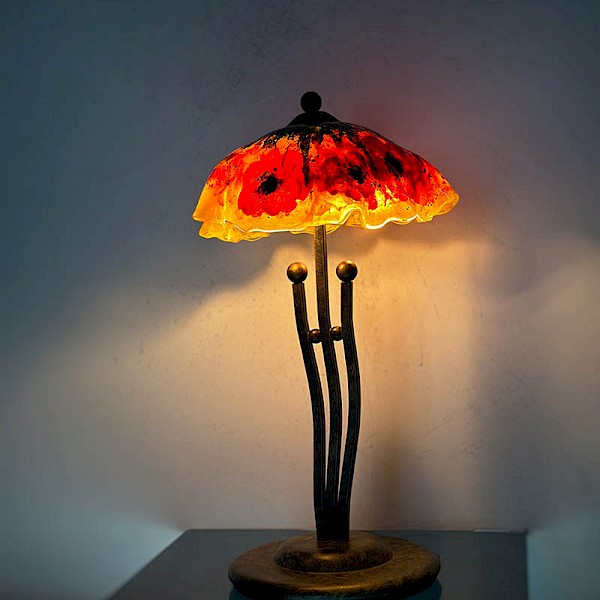
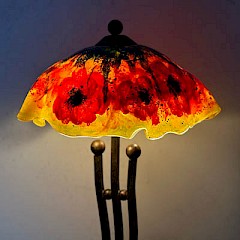
Inspired by the architecture of Antoni Gaudí, where light becomes a building material in its own right and natural forms provide the language of design. This lamp explores the moment when light no longer falls upon the glass, but seems to emerge from within it. The result is a living interplay of colour, transparency and light.
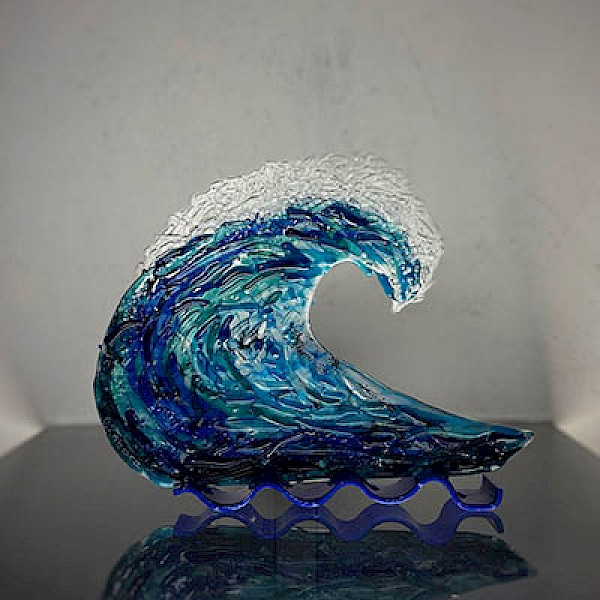
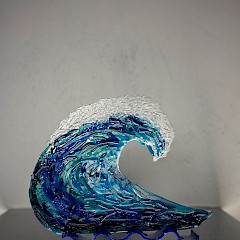
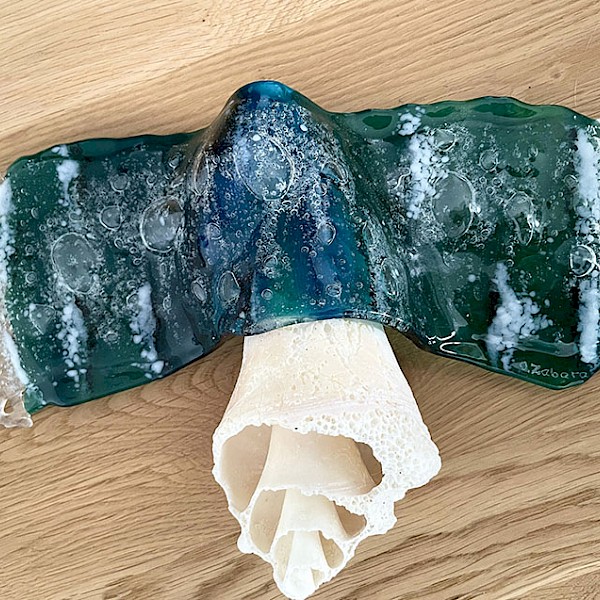
Inspired by the Japanese artist Hokusai and his fascination with the movement of water. The sea itself is not the central subject, but rather the instant in which movement almost becomes sculpture.
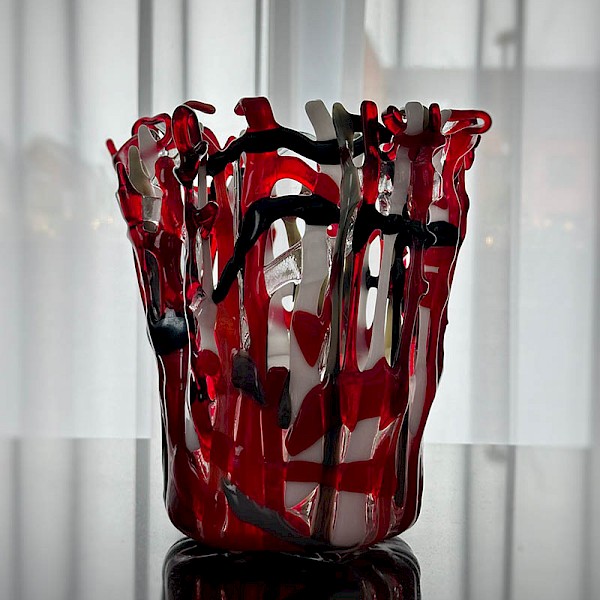
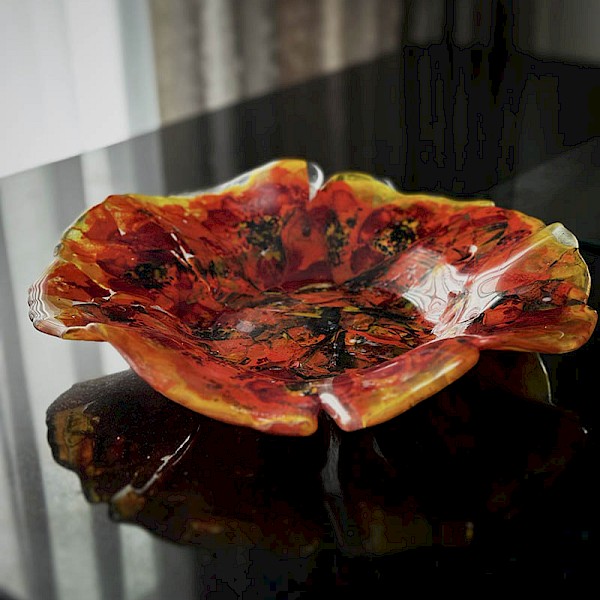
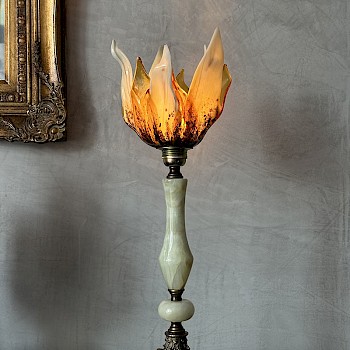
During a journey through Catalonia, it was not the landscape itself that stood out, but the colours of weathered walls, terracotta roofs and evening light. The work grew from the question of what the warmth of the sun might look like if it could be captured in glass.
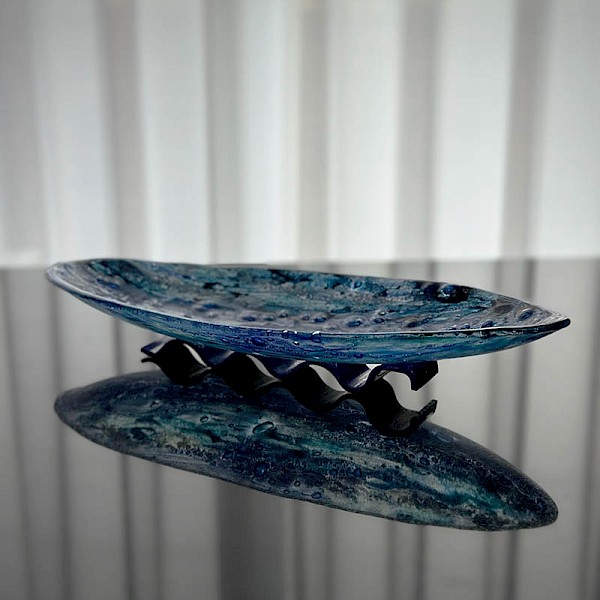
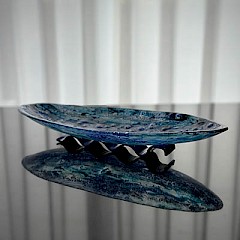
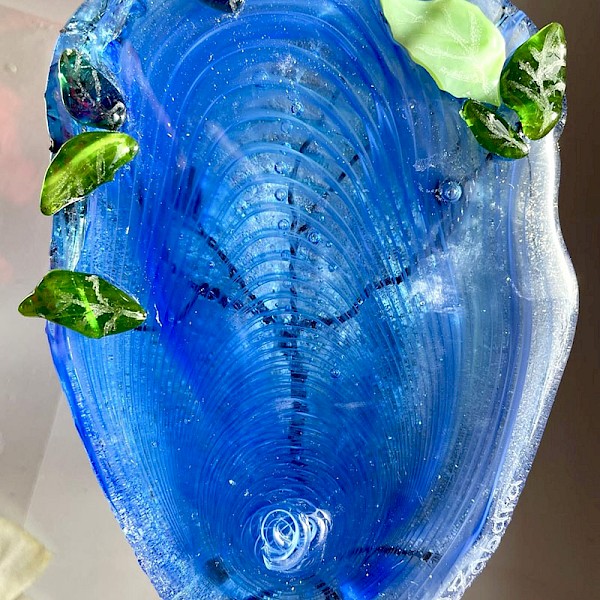
Born from observing shallow tropical waters. Seen from a boat, the colours do not appear to exist side by side, but to flow through one another. The dish seeks to hold on to that constant movement.
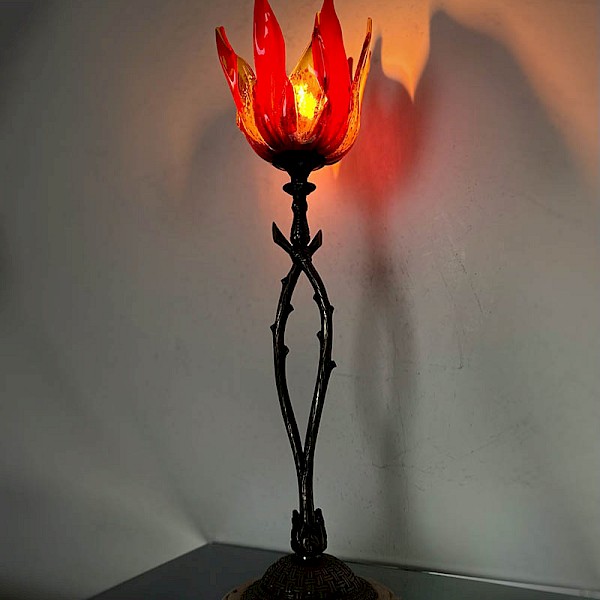
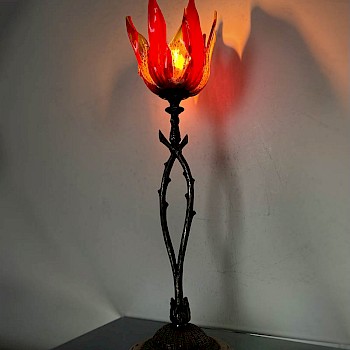
Inspired by the myth of the Phoenix. Not as a literal bird, but as the idea that beauty often emerges after a period of change or loss.
Sold for 980 €
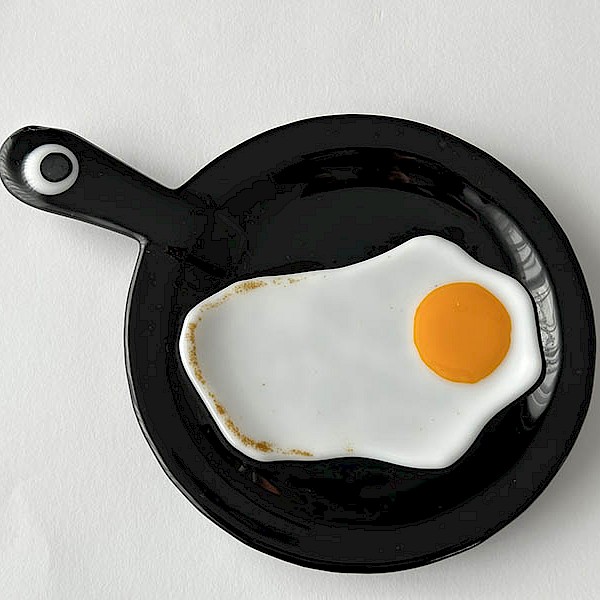
Sold for 120 €
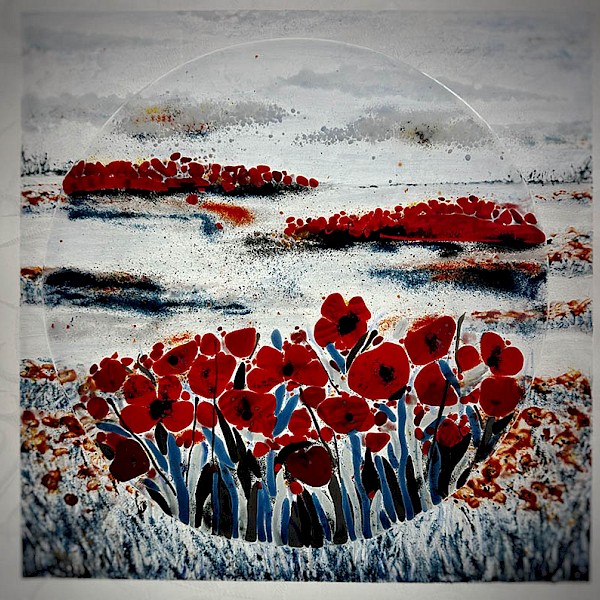
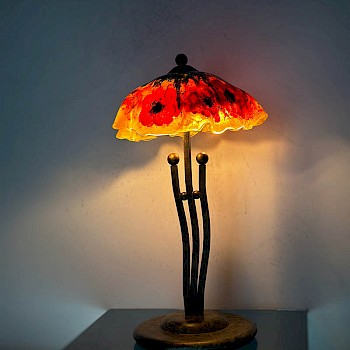
Inspired by the French Impressionists, particularly Claude Monet. The flowers were not the starting point, but the morning light, forever changing and never the same twice.
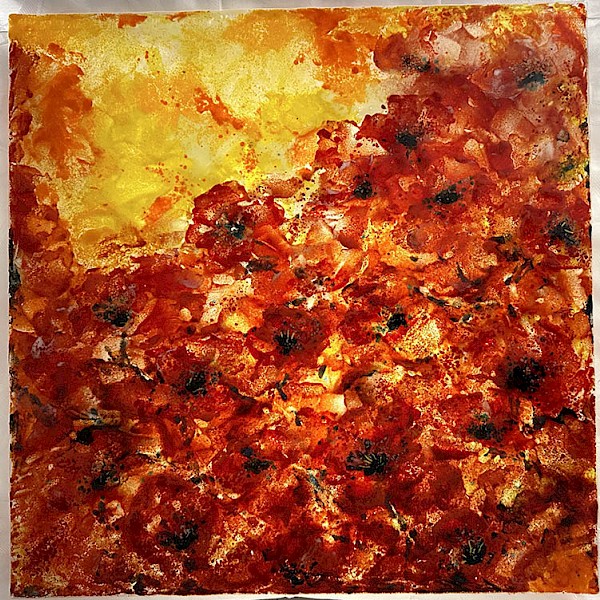
This work arose from a desire to share warmth. Sometimes people, places or moments evoke a sense of comfort that is difficult to put into words. I decided not to describe that feeling, but to capture it directly in glass. The warm shades of red, gold and orange represent neither a landscape nor an object, but an emotion everyone recognises: the feeling of being welcomed, seen and at home.
Sold for 2900 €
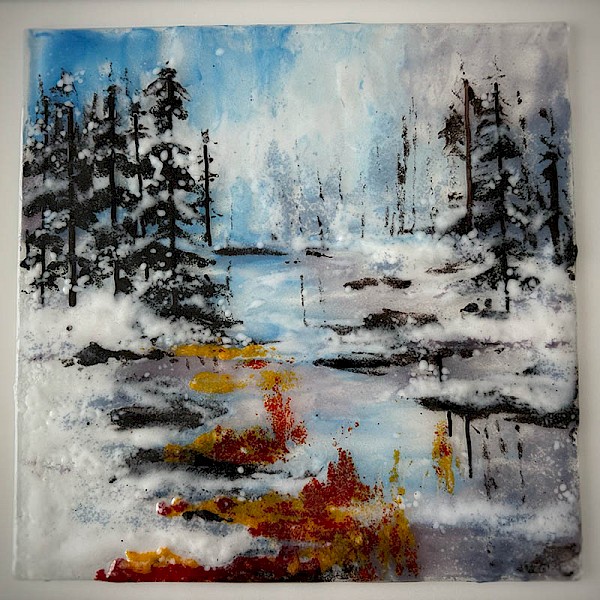
The inspiration for this work lies in the winters of my childhood. Long, snow-filled periods when the world seemed to slow down and sound was softened by a thick white blanket. Despite the cold, what I remember most is the light: the low winter sun illuminating snow and ice. The work recalls those hushed winter landscapes where nature, light and silence came together.
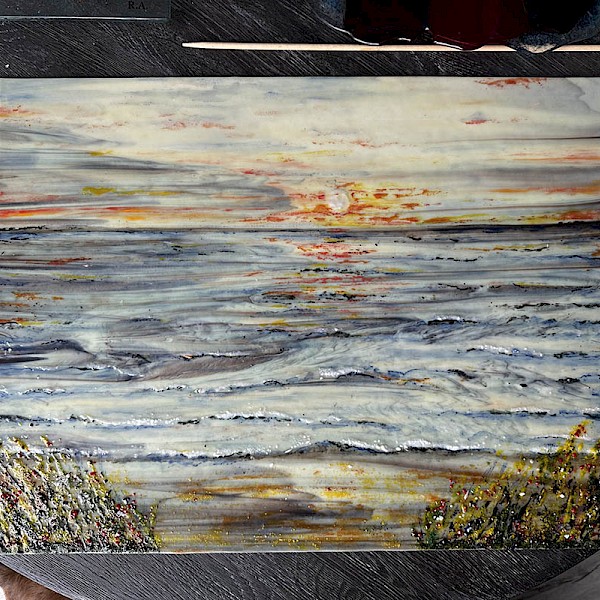
The North Sea is unlike almost any other sea I have known. There were no tropical colours or predictable calm, but a constantly shifting landscape of light, clouds and water. During walks along the Dutch coast, I became fascinated by the way the horizon sometimes seemed to disappear, allowing sea and sky to merge into one.
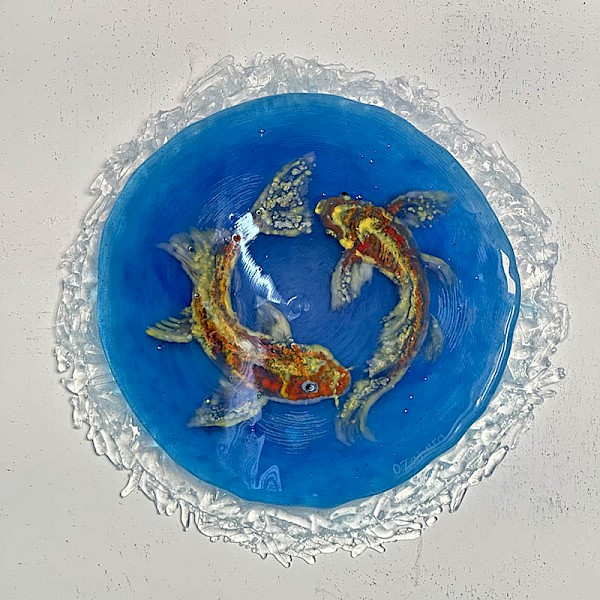
The inspiration for this work arose from the conviction that everything in life seeks a natural balance. Joy and sorrow, stillness and movement, giving and receiving, light and darkness. Neither can truly exist without the other. The two fish symbolise not only the ancient principle of Yin and Yang, but also the continuous flow of life itself. At times we resist change, although it is precisely within that alternation that the beauty of existence becomes visible. This work is a reminder that balance does not mean standing still, but remaining in a constant motion.
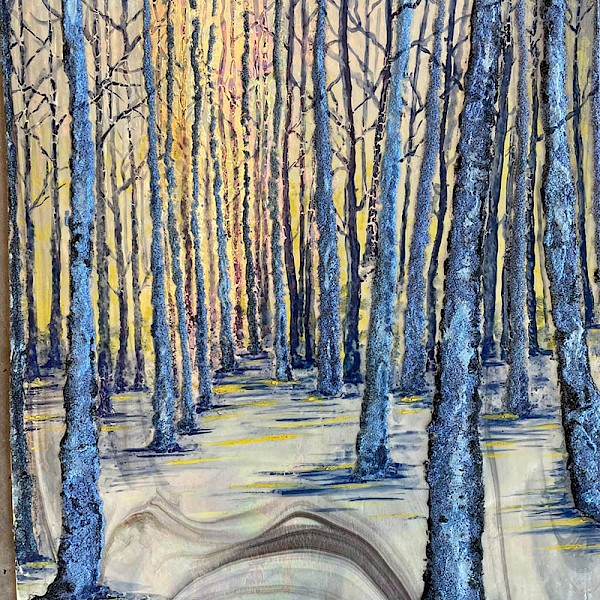
During walks through misty forests, I became fascinated by the mysterious atmosphere created as trees slowly emerged from haze and shadows of the fog. The forest no longer seemed an ordinary place, but a passage into a dream world where anything was possible. The work was inspired by the sense of wonder children can still experience when entering a forest and imagining a new adventure behind every tree. Blue Forest invites the viewer to reconnect with that inner child, where imagination and reality still flow effortlessly between one another.
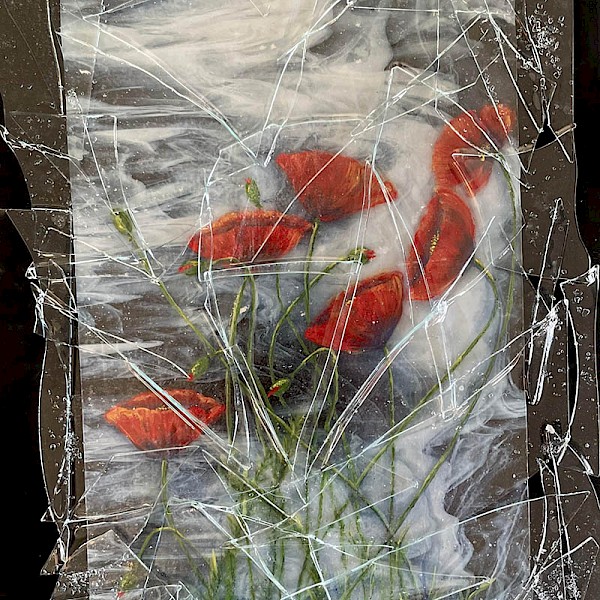
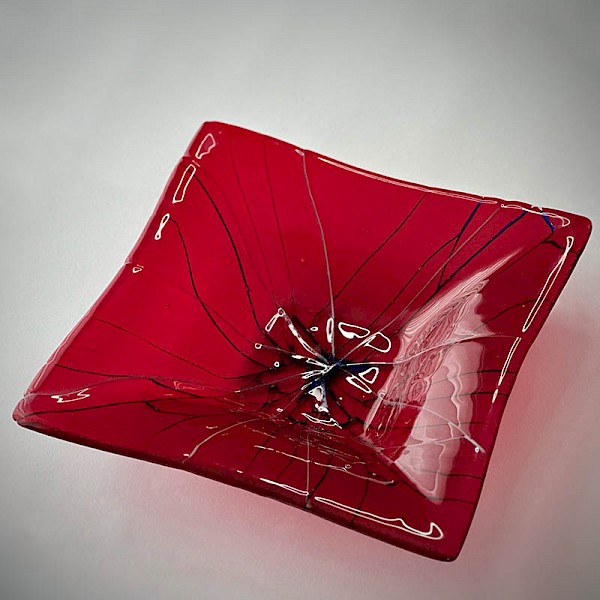
This work arose from a deep and personal longing: the wish to end all wars. In many countries, the poppy symbolises war, the loss and remembrance of the victims of violence. I asked myself: what if the pain could be frozen before it creates new victims? The fragile layers of glass appear to hold the flowers suspended in time. Not to preserve their beauty, but to bring suffering to a halt.
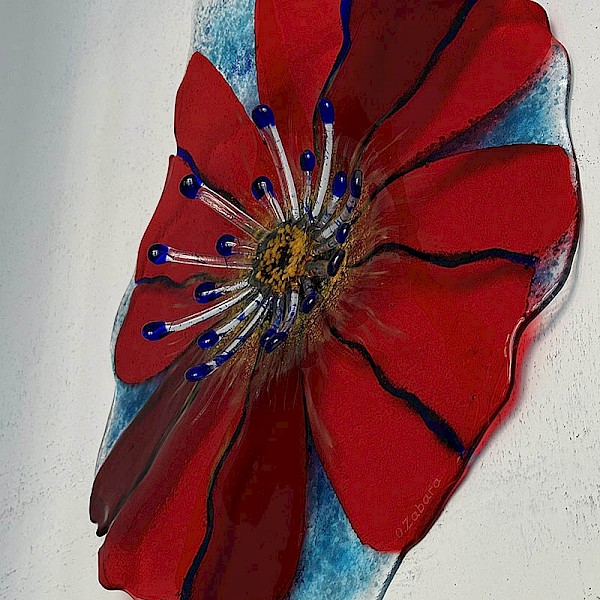
No Poppy is a tribute to René Magritte and his famous statement, “Ceci n’est pas une pipe (English: This is not a pipe)”. Magritte challenged people to look beyond what their eyes seem to immediately perceive. I wanted to ask that same question. Not “What do I see?”, but “What do I feel?” Although the form immediately evokes a poppy, the work is not about the flower itself. It is about our tendency to name everything at once and, in doing so, sometimes miss the deeper experience. In this work, I invite you to let go of the familiar and make room for intuition, feeling and personal experience.
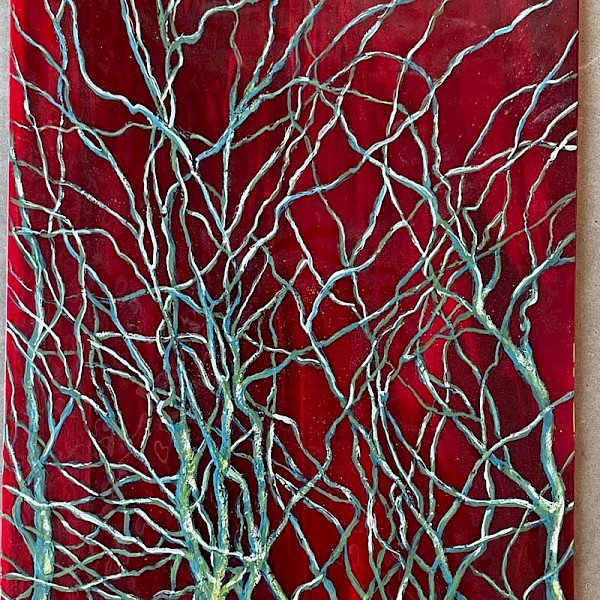
The inspiration came from the endless branching of human thought. Ideas grow, intersect, disappear and return unexpectedly, like branches that continue to divide and spread year after year. This work is a visual translation of the mental landscapes we all carry within us.
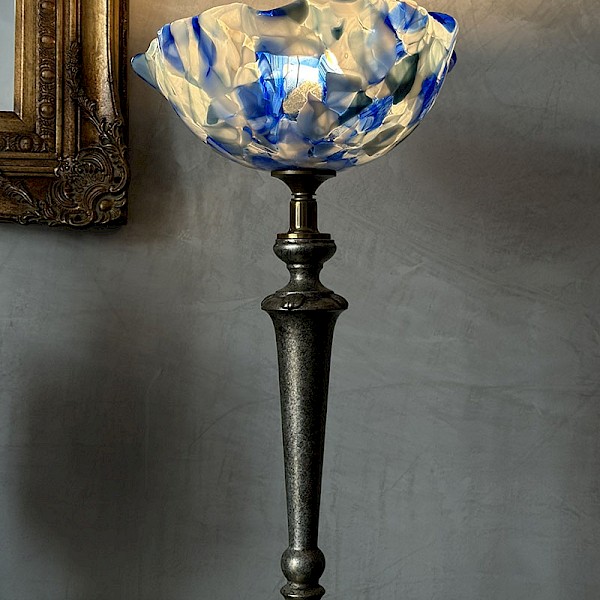
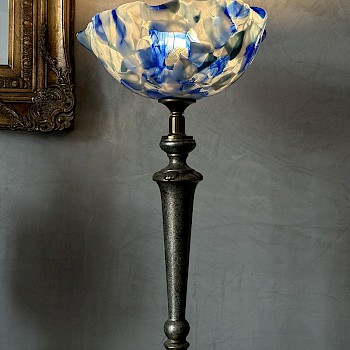
While walking through fields, I noticed that the simplest wildflowers often leave the strongest impression. The cornflower does not grow in carefully designed gardens, but freely and uninvited amongst the grain. Its intense blue colour forms a striking contrast with its modest character. That contrast between simplicity and beauty inspired this work.
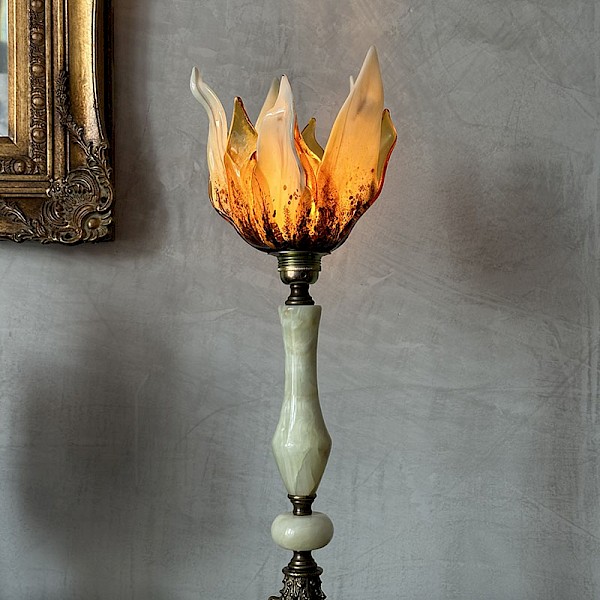
Sometimes an object feels as though it still has a story to tell. When I found this old lamp base, I did not ask what it had once been, but what it might still want to become. From that feeling, a new glass form emerged, connecting past and present. The series “Time Passed” is an ode to second chances and to beauty that endures beyond time.
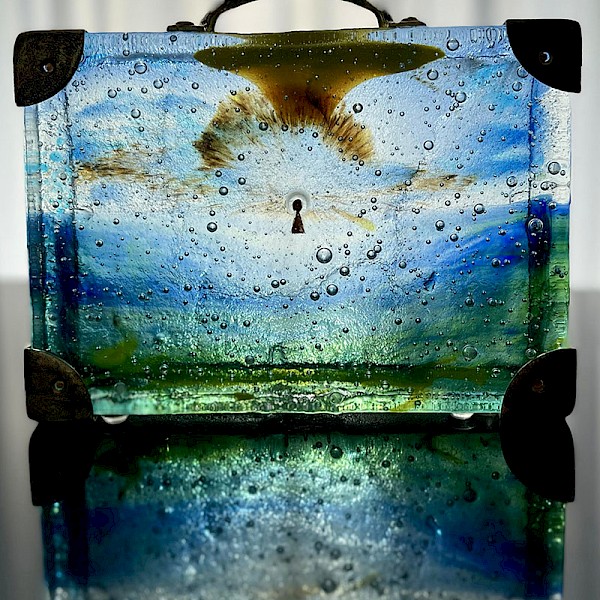
The old suitcase refers to journeys through life and to all the experiences we gather along the way. The destination is not our true luggage; our memories are. The lock at its centre symbolises memories kept safe, while the air bubbles in the glass evoke moments that slowly fade yet never disappear completely.
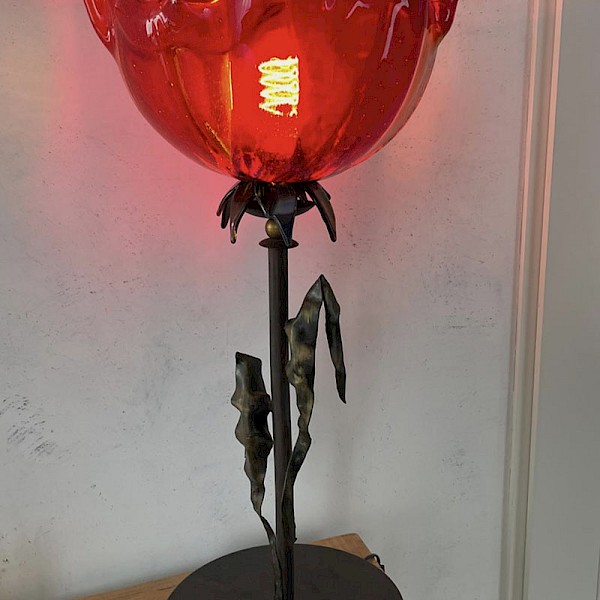
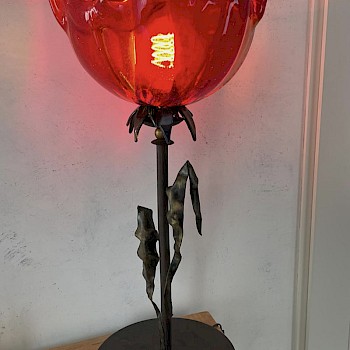
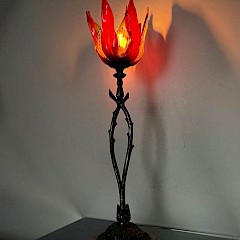
The inspiration comes from the Art Nouveau movement, in which nature and light were interwoven. I wanted to create a flower that does not depend on sunlight in order to bloom, but generates light of its own. In doing so, the boundary between art object, sculpture and lighting begins to dissolve.
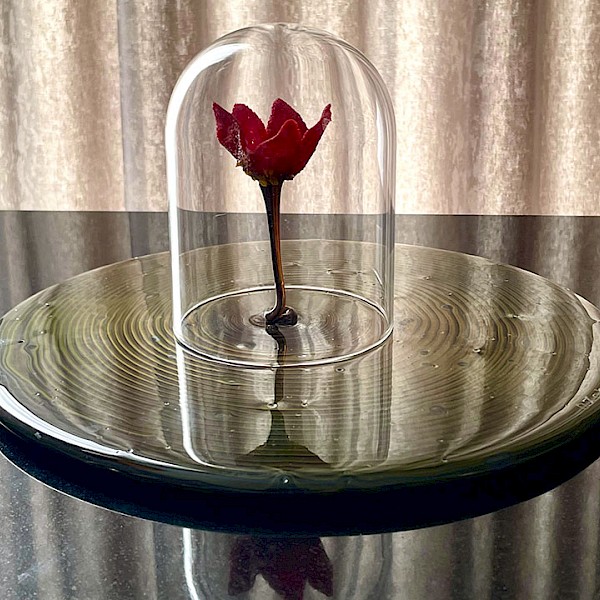
This work was inspired by the beauty of vulnerability. Hope is rarely loud or grand. It usually begins as something small that needs protection in order to grow. The glass dome refers to the care with which people nurture dreams, ideals and new possibilities. Precisely because hope is fragile, it deserves our attention.
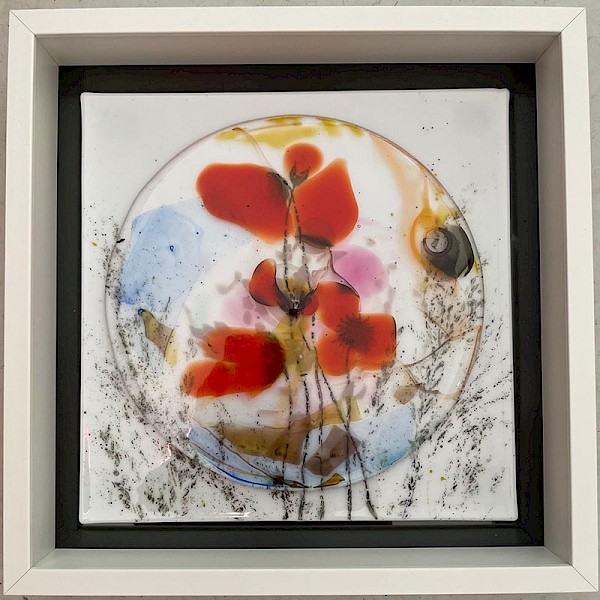
Everyone experiences moments when life takes a different direction from the one planned. At first, such events often feel disruptive or unwelcome. Yet many unexpected turns later reveal new opportunities, remarkable encounters or valuable experiences. Unexpected arose from that idea. The work celebrates life’s ability to surprise us and shows that beauty does not always need to be planned or controlled. Sometimes the most valuable things emerge precisely when we release our expectations and open ourselves to the unknown.
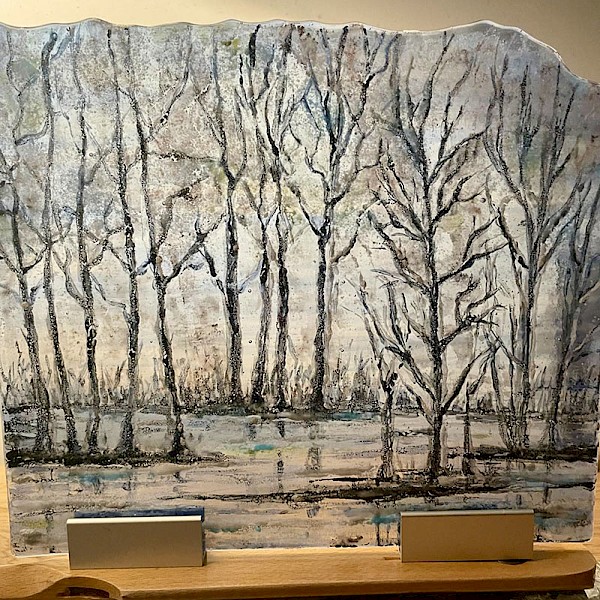
The Nostalgia series was inspired by the winter landscapes of the Old Dutch Masters, in which skaters glided across frozen canals and the traditional wooden skate was an ordinary part of Dutch winter life. Such winters and scenes seem increasingly rare today. The wooden skate supporting the artwork is a tribute to that vanished world. Nostalgia is not only about memories of the past, but also about cherishing traditions, landscapes and stories that are slowly fading from our collective memory.
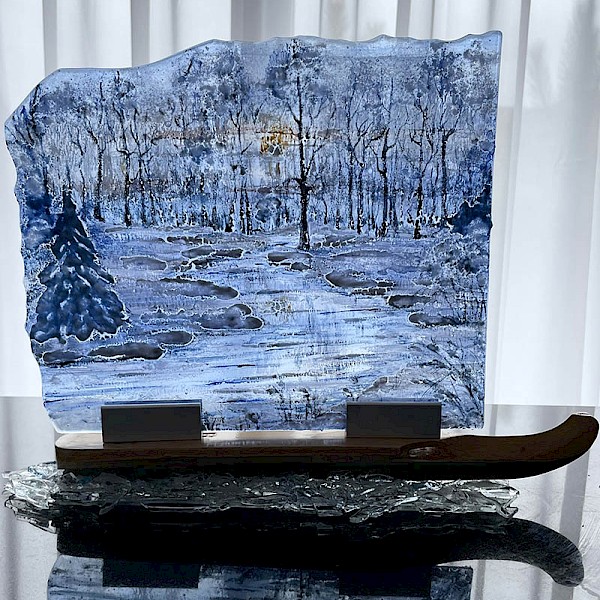
The Nostalgia series was inspired by the winter landscapes of the Old Dutch Masters, in which skaters glided across frozen canals and the traditional wooden skate was an ordinary part of Dutch winter life. Such winters and scenes seem increasingly rare today. The wooden skate supporting the artwork is a tribute to that vanished world. Nostalgia is not only about memories of the past, but also about cherishing traditions, landscapes and stories that are slowly fading from our collective memory.
Contact me by email: info@ozabara.art